Das Sierra Leone National Railway Museum (SLNRM) hatte bereits im Oktober 2024 mit der Planung von Feierlichkeiten zu den verschiedenen Jubiläen im Jahr 2025 begonnen, und die Gespräche wurden in der Zwischenzeit virtuell fortgesetzt. Geplant war eine Reihe von Aktivitäten, beginnend mit der von Großbritannien initiierten Aktion ‘Whistle Up’ am 1.st Januar 2025.
William Bickers-Jones, ein Treuhänder der „Friends of the Sierra Leone National Railway Museum“, hatte uns auf eine Reihe von Beiträgen aufmerksam gemacht. YouTube, nachdem sie vor ein paar Jahren die niederländische Motorradfahrerin Noraly Schoenmaker, auch bekannt als 'Itchy Boots', auf ihrer Fahrt durch Westafrika begleitet hatte.
Ich teilte den Link zur Serie mit Patrick Jibao Massaquoi, dem Bildungs- und Öffentlichkeitsbeauftragten von SLNRM. Er war so begeistert vom Anschauen, dass er beschloss, sie im Rahmen von „Railway 200“, das mit dem 20. Jahrestag der Eisenbahn zusammenfiel, zu veröffentlichen.th Jubiläum des Museums und des 50.th Zum Jahrestag der Stilllegung der Sierra Leone Railway unternahm er eine Motorradtour von Pendembu nach Freetown, besuchte unterwegs Bahnanlagen und sprach mit Menschen, die sich noch an den Betrieb der Bahnlinie erinnerten. Ich muss zugeben, dass ich damals etwas skeptisch war, da Patrick sich im Oktober 2024 bei einem Motorradsturz in Freetown Rippenbrüche zugezogen hatte. Doch er blieb fest entschlossen, und was für eine fantastische Reise es wurde!
Die Reise umfasste insgesamt 765 Kilometer und dauerte drei Tage, um die historische Eisenbahnstrecke nachzuvollziehen. Sie diente sowohl als Hommage an das Erbe der Eisenbahn als auch als Gelegenheit, mit ehemaligen Eisenbahnarbeitern in Kontakt zu treten.
Laut Patrick J. Massaquoi war das Hauptziel der Fahrt, ehemalige Eisenbahnarbeiter der Sierra Leone Railway und die historische Bedeutung der ehemaligen Bahnhöfe entlang der Hauptstrecke der Sierra Leone Railway von Freetown nach Pendembu zu würdigen. Gedenkmedaillen wurden an ehemalige Eisenbahner oder posthum an deren Familien überreicht, und Interviews wurden aufgezeichnet, um mündliche Überlieferungen über den Betrieb der Sierra Leone Railway zu bewahren.
Er verließ sein Haus noch vor Tagesanbruch, am Samstag, den 8., um 6:45 Uhr.th March fuhr nach Jui Junction, um sich dort mit seinem Fotografen Alie Kargbo zu treffen, der ein Motorrad mit Fahrer gechartert hatte, um ihn zusammen mit Patrick nach Pendembu zu bringen.
Sie erreichten Moyamba Junction rechtzeitig für ein frühes Mittagessen und schickten um 14.45 Uhr Fotos von der Moa River Bridge bei Daru. Am späten Nachmittag kamen sie in Pendembu an, dem östlichen Endpunkt der Sierra Leone Railway, 227,5 Eisenbahnmeilen von Freetown entfernt.
Am frühen Abend besuchten Patrick und Alie die Familie Palmer in Pendembu.
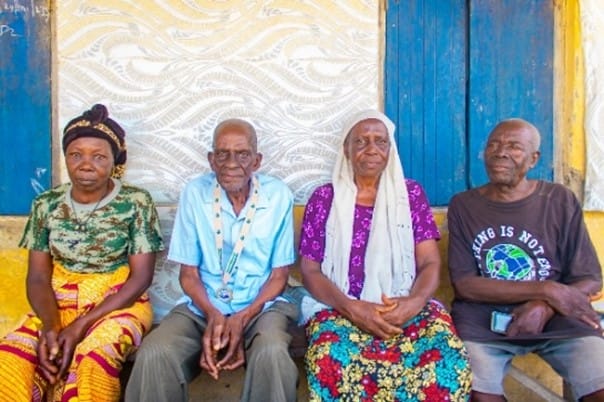 Herr Henry Palmer war Maschinenschlosser und hatte seine Ausbildung in den Werkstätten der Nationalen Eisenbahn in Cline Town absolviert. Mitte der 1950er-Jahre, als in Sierra Leone Diesellokomotiven eingeführt wurden, zog er als Dieselmechaniker nach Pendembu. Der mittlerweile über 90-jährige Herr Palmer erinnerte sich an seine Zeit bei der Eisenbahn und stellte seinen Sohn Toma vor, der bei ihm in der Werkstatt in Pendembu eine Lehre als Maschinenbaumechaniker absolviert hatte.
Bei der Entgegennahme seiner Medaille sagte Herr Palmer: “Heute, da ich diese Auszeichnung entgegennehme, bin ich von tiefem Stolz und großer Dankbarkeit erfüllt. Die Sierra Leone National Railway hat mein Leben maßgeblich geprägt und nicht nur meine Karriere, sondern auch meine Identität geformt. Ich habe viele Jahre für diese Eisenbahn gearbeitet und ihre Erfolge und Herausforderungen miterlebt. Diese Medaille würdigt nicht nur meine Leistungen, sondern symbolisiert auch den gemeinsamen Einsatz und die Widerstandsfähigkeit aller, die für die Sierra Leone Railway tätig waren. Ich nehme sie im Namen meiner ehemaligen und jetzigen Kolleginnen und Kollegen entgegen, die zum Erbe der Eisenbahn beigetragen haben. Mögen wir dieses Erbe bewahren und künftige Generationen inspirieren.”
Am nächsten Tag brachen Patrick und Alie frühmorgens erneut auf und folgten der Strecke der Sierra Leone Railway nach Segbwema, wo der alte Wasserturm noch heute zu sehen ist. Unterwegs entdeckten sie einen Bahnhof in Serabu, der uns zuvor auf der Karte entgangen war.
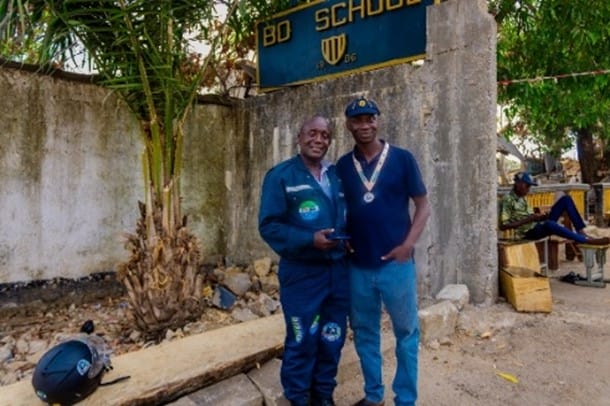
Sie durchquerten Hangha und Kenema und reisten weiter nach Bo, der zweitgrößten Stadt Sierra Leones, wo sie die Bo-Schule besuchten. Die Schule lag in unmittelbarer Nähe der Eisenbahnlinie, und viele Jungen fuhren mit dem Zug zur Schule; die Kosten für die Jahreskarte waren in den Schulgebühren enthalten.
Viele alte Eisenbahngebäude befinden sich heute auf dem Schulgelände und werden weiterhin von der Schule genutzt. Der Schulleiter, Sohn eines Eisenbahners, nahm erfreut eine Gedenkmedaille im Namen seines verstorbenen Vaters entgegen.
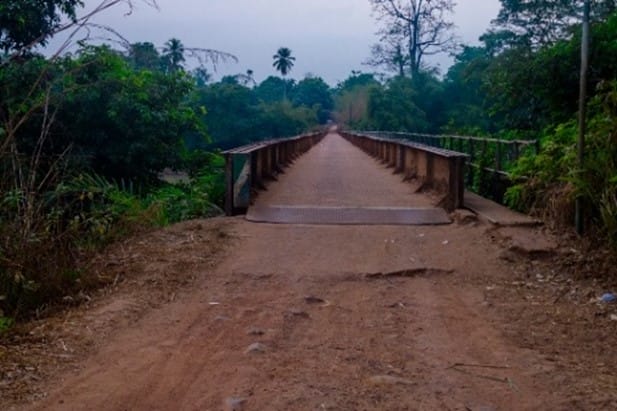 Nachdem unsere unerschrockenen Motorradfahrer die Nacht in Bo verbracht hatten, setzten sie ihre Reise fort, überquerten die Taia-Flussbrücke, machten Halt in Patricks Heimatstadt Mano und fuhren dann wieder westwärts über die ehemalige Eisenbahnbrücke über den Yambatui-Fluss nach Moyamba, wo sie der Harford School for Girls einen Besuch abstatteten.
Ihre letzte Nacht auf dem Wanderweg verbrachten sie in Bauya, wo Alie einige wunderbare Luftaufnahmen machte, die den Grundriss des Bahnhofs und der Eisenbahnerwohnungen sowie Nahaufnahmen vieler der dortigen Relikte zeigen.
In Bauya sagte Paramount Chief Alfred Saidu Ndomawa Banya II, Kongbora Chiefdom Moyamba District, zu Patrick: “Es ist mir eine große Ehre, heute als Oberhäuptling des Kongbora-Häuptlingstums im Distrikt Moyamba vor Ihnen zu stehen und Ihnen meinen herzlichen Dank für die Verleihung der Anerkennungsmedaille in Würdigung meiner Rolle und meines Engagements für den Schutz der Eisenbahndenkmäler in meinem Häuptlingstum auszusprechen. Diese Auszeichnung ist nicht nur eine bedeutende persönliche Ehre, sondern auch ein Beweis für die gemeinsamen Anstrengungen aller Beteiligten in meinem Häuptlingstum zur Bewahrung unseres reichen Erbes.“.
Die Eisenbahnrelikte, die unser Land schmücken, sind nicht bloße Überreste der Vergangenheit; sie sind unschätzbare Symbole unserer Geschichte, Kultur und der Widerstandsfähigkeit unseres Volkes. Sie erzählen die Geschichte unseres Weges, unserer Kämpfe und unserer Triumphe. Es ist unerlässlich, dass wir diese Relikte bewahren, nicht nur für uns selbst, sondern auch für zukünftige Generationen, die zurückblicken und aus den Lehren unserer Geschichte lernen werden. Indem wir diese Stätten schützen, bekräftigen wir unser Engagement für die Pflege unserer kulturellen Identität und die Förderung des Stolzes unserer Jugend. Mein tiefster Dank gilt allen, die diese Initiative unterstützt haben, insbesondere den Gemeindevorstehern, Familienmitgliedern, den Organisationen des Häuptlingstums und jedem einzelnen Mitglied des Kongbora-Häuptlingstums. Ihr unerschütterliches Engagement und Ihre Leidenschaft für unser Erbe haben diesen Erfolg ermöglicht. Gemeinsam haben wir gezeigt, dass wir Außergewöhnliches erreichen können, wenn eine Gemeinschaft sich für ein gemeinsames Ziel vereint.
Lasst uns gemeinsam unsere kulturellen Schätze bewahren und dafür sorgen, dass sie auch künftigen Generationen als Quelle der Inspiration und Bildung dienen. Diese Medaille ist nicht nur eine Anerkennung meiner Bemühungen, sondern auch ein Ausdruck unseres gemeinsamen Engagements für den Erhalt des Erbes unserer Vorfahren. Nochmals herzlichen Dank für diese hohe Auszeichnung. Lasst uns die Fackel des Kulturerhalts hochhalten und die reiche Geschichte des Kongbora-Häuptlingstums weiterhin ins Licht rücken.”
Die Fahrt diente nicht nur der Würdigung des reichen Eisenbahnerbes, sondern auch der Förderung des gesellschaftlichen Engagements und des Bewusstseins für die Bedeutung des Erhalts unserer Eisenbahngeschichte. In Informationsveranstaltungen mit Mitgliedern der Eisenbahn-Schulclubs der Harford Secondary School for Girls in Moyamba und der St. Peters Junior Secondary School in Bauya wurde die Wichtigkeit des Erhalts der lokalen Geschichte, die Stärkung des Stolzes auf das eigene kulturelle Erbe und die Anregung zukünftiger Generationen, die Vergangenheit wertzuschätzen und aus ihr zu lernen, thematisiert.
Die Radtour war ein voller Erfolg und stellt erst den Anfang der Mission des SLNRM dar, das Eisenbahnerbe des Landes zu bewahren und zu präsentieren. Weitere Aktionen zur Vermittlung von Wissen sind für den Rest des Jahres 2025 landesweit geplant.